

Easing defence FDI norms a game-changer for India: Report
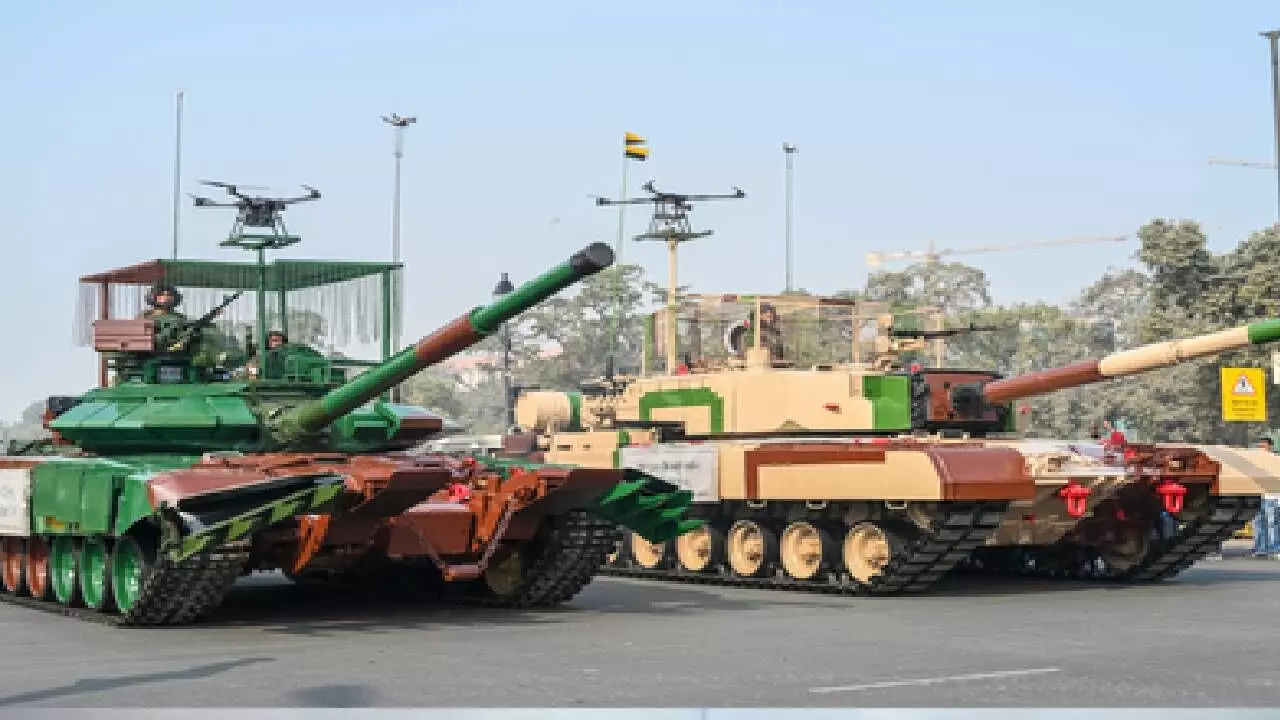
image for illustrative purpose
New Delhi: India is considering a significant relaxation of Foreign Direct Investment (FDI) rules in the defence sector, raising the automatic route ownership cap from 49 to 74 per cent for existing licensed defence firms and removing vague conditions that would reshape its defence landscape, a recent report has highlighted.
“This policy shift aims to lure global manufacturers, fostering joint ventures and technology transfers to bolster domestic production,” observed an article in the India Narrative.
“Amid rising geopolitical tensions and a push for self-reliance under the ‘Make in India’ initiative, these changes could prove transformative, enhancing economic growth, technological advancement, and national security,” it added.
Exploring why this could be a pivotal game-changer for India, the article pointed out that India’s defence sector has historically been cautious about foreign involvement due to security concerns.
It was in 2016 that FDI up to 49 per cent was allowed under the automatic route, with higher stakes requiring approval. By 2020, the cap rose to 74 per cent automatic for new licenses, and 100 per cent with government nod in cases involving advanced tech, it reminded.
Despite these steps, existing licensed firms remained capped at 49 per cent, which the new proposal seeks to change, it said.
The central economic argument is that raising the automatic route cap to 74 per cent will make India a more attractive destination for large defence firms by offering greater operational control, stronger intellectual property protection, and clearer ownership rights.
These factors, it opined, multinational defence companies often require before committing large capital and technology transfers. The piece noted India’s defence market size – at over $ 75 billion in fiscal 2025–26 – and the government’s push for a 20 per cent budget increase for 2026–27, framing the reform as a lever to channel foreign capital into manufacturing hubs.
The new move would create skilled jobs, and stimulate ancillary industries such as electronics and materials. Projections cited in the article suggest liberalised norms could attract $ 5–10 billion over the next decade and help reduce import dependence, which currently accounts for 60–70 per cent of defence needs.
The article also argued that technology transfer from partners in the US, France, Israel, and other allied countries could accelerate indigenisation of complex systems, including fighter jets, submarines, missiles, and advance capabilities in AI, cybersecurity, and hypersonics, where India currently lags.
Stressing “In a multipolar world, defence manufacturing is a key arena for influence,” the report cited “China’s dominance in supply chains has prompted Western firms to diversify. India’s reforms position it as an alternative, leveraging its democratic credentials and skilled workforce. With FTAs like those with the UK and EU expanding, FDI in defence could leverage tariff benefits for exports.”
The article draws comparisons with countries such as Vietnam, Turkey, Brazil, and South Africa, which reportedly saw defence exports and FDI rise after liberalisation. It suggests India could emulate those trajectories, leveraging free trade agreements and its skilled workforce to become an export hub for defence equipment, targetting markets in Southeast Asia and Africa and aiming to capture a slice of the global $ 2 trillion defence market.
The central economic argument is that raising the automatic route cap to 74 per cent will make India a more attractive destination for large defence firms by offering greater operational control, stronger intellectual property protection, and clearer ownership rights





